
Article
How device lifecycle automation is built to adapt
Automation is often built around a simple premise: do the same thing repeatedly, consistently, and efficiently. Device lifecycle operations present a different challenge.
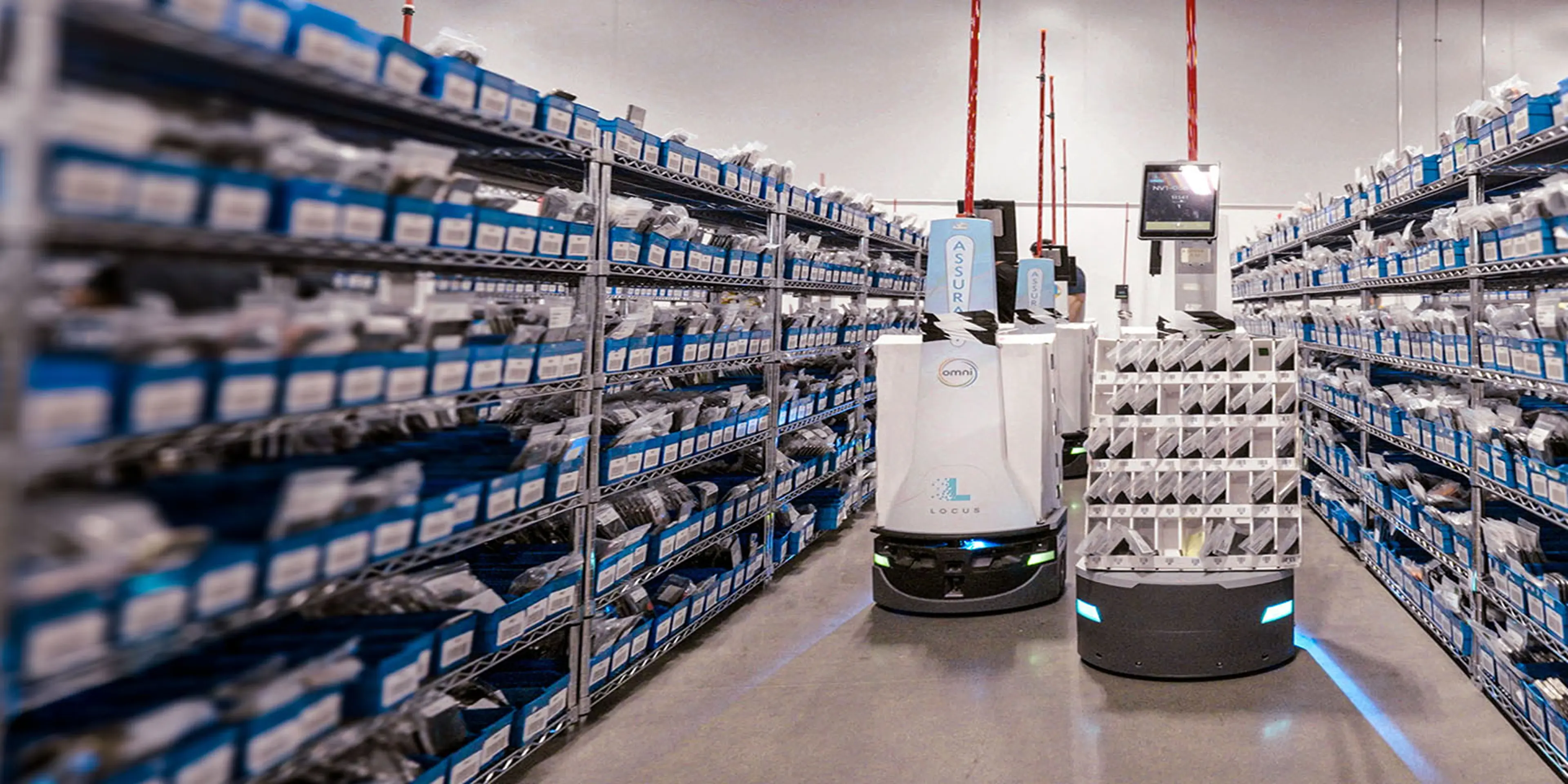
At Assurant’s Device Care Centers, returned devices and trade-ins are received, evaluated, and directed toward the appropriate next outcome. But those devices don’t arrive in predictable combinations. Models and conditions vary, client programs have different requirements, volumes can change rapidly, and the devices themselves continue to evolve.
That means effective device lifecycle automation has to do more than repeat. It has to adapt.
At Assurant, that challenge brings hardware automation, software, engineering, and live operations together. We spoke with Pete Bremer, Vice President of Global Automation and Engineering, and Skylar Raney, Program Manager for Global Engineering and Automation, about how that model works and why flexibility is becoming increasingly important to the future of device lifecycle management.
Pete brings nearly 30 years of experience in automation, including manufacturing, production efficiency, and robotics implementation. Skylar helps align the strategic vision of Assurant’s Device Care Centers with the automation needed to support changing devices, client programs, and business requirements.
Why is device lifecycle automation different from traditional manufacturing automation?
Skylar:
Typically, when you think of automation, the goal is to make the same thing every time. But we’re in a reverse logistics environment, so we have hundreds of thousands of SKUs. These are used phones. Every phone is unique, and we have to accommodate that.
That’s why we focus on both modularity and standardization. We don’t want to create something so specific to one client that it can’t be used for anyone else. We want automation that can flex to different client needs while still supporting the different products that come through our Device Care Centers.
Why does bringing engineering, software, and live operations together matter?
Pete:
In the modern world, software and hardware require each other to work effectively. Software gives us the tools to track products and determine where they’re coming from and where they need to go, while the physical automation has to connect to those systems. They have to speak the same language.
One of our most important competitive advantages is the fact that our engineering, build, design, and software teams (our entire ecosystem) all live within Assurant. That creates a high-velocity environment that allows us to be incredibly nimble on behalf of our customers.
Skylar:
Our automation team is in-house, and the physical products that our automation has to support are on the other side of the building. We know firsthand what the problems are, and we can work directly with operations to determine how to solve them.
We can design, test, prototype, build, and deploy systems before they hit the production floor. Once automation is deployed, our engineers can work directly with frontline operators to understand what’s working, what isn’t, and where the pain points are. That continuous feedback loop helps us make the automation better, faster, more efficient, and easier to use.
How does Assurant adapt when device volumes and client requirements change?
Pete:
We don’t always have great predictability about what the consumer market is going to do. We may go from 20,000 units to 100,000 units in one particular day. That puts additional strain on the equipment, the machinery, and the people who support it.
It’s critical that we have live, in-person staff on-site who can make adjustments when different model mixes or volumes come in. Client requirements can change frequently, too. With every new promotion, the likelihood of a different device mixture goes up exponentially. Having all of this under one roof and one system allows us to move quickly and make changes in real time.
With so much emphasis on automation, where do people fit?
Skylar:
People are critical to the process. Frontline operators know the work best, and their experience helps inform how we approach automation.
We want to use automation to make the job easier and more efficient. Our goal is to remove dirty, dull, dangerous, or highly repetitive work and reduce the burden of those tasks on our teams.
Pete:
We also focus on ergonomics and reducing repetitive-work injuries. A great example is our box-cutting systems, which reduce the number of box-opening knives required on the floor and the risk of nicks, cuts, and repetitive wrist injuries.
That system is focused on our people as well as our efficiency. It shows how we think about how the system needs to interact with both the people and the work.
What does flexible automation mean for Assurant’s clients?
Skylar:
For clients, the flexibility of our automation means we can move more rapidly. If we already have the automation or the design for it, we can flex to support different business needs rather than starting from scratch every time.
We also look at the whole business need, including hardware, software integration, operator pain points, and what the client is trying to accomplish. Bringing those groups together helps us solve the right problem and support speed of execution, efficiency, cost savings, and additional value for the business and the client.
What is device lifecycle automation ultimately trying to accomplish?
Pete:
Our core ethos is to prevent a device from going to a landfill and give it an alternative purpose.
When a product comes in, it may be a return, a damaged device, or a device coming back through an insurance fulfillment program. Our charter is to determine the best value proposition for that device.
In some cases, that means becoming a second-life device that can be repurposed and sent to another user. In other cases, it may be liquidated or harvested for parts. The right outcome depends on the device.
How do you build device lifecycle automation for what comes next?
Pete:
To be flexible and truly connected to what’s coming, we have to be ahead of it. As device capabilities and form factors change, they can create a very different environment for automation.
We do engineering thought exercises on what those future form factors might look like and pre-engineer some of our tooling to support them in advance. In some cases, we’re making predictions one to two years ahead of where we are today.
Skylar:
We also have to think about other ways devices could change, like from different port types to potentially no port at all, and how we adapt to and support those OEM changes. And it goes beyond phones. As new products gain more functionality, we have to keep thinking about how we handle watches, hearables, and other connected devices more efficiently.
The objective isn’t to reach a point where the system never changes again. It’s to build an operation capable of changing with what comes next, so we can keep innovating as the industry, devices, clients, and partnerships change.
Building automation that can adapt is only part of the story. See how that technology, engineering, and human expertise come together across the device journey from the moment a device arrives at an Assurant Device Care Center to the point it’s ready for what comes next.

Assurant Editorial Team
The Assurant Editorial Team shares stories that inspire and empower, helping you unlock opportunities and stay ahead with the latest research and insights. Assurant is a premier global protection company that partners with the world's leading brands. As a Fortune 500 company operating in 21 countries, we leverage data-driven technology solutions to provide exceptional customer experiences.