

Article
Why your NPS timing matters more than you think
When it comes to understanding your customers, one question stands above the rest.
“On a scale of 0 to 10, how likely are you to recommend this product, service, or brand to a friend or colleague?”
This simple question forms the basis of calculating a Net Promoter Score (NPS), one of the most trusted customer loyalty metrics available. Based on their answers, customers are grouped as Promoters, Passives, or Detractors, making it easy to track satisfaction over time and accurately identify areas for improvement.
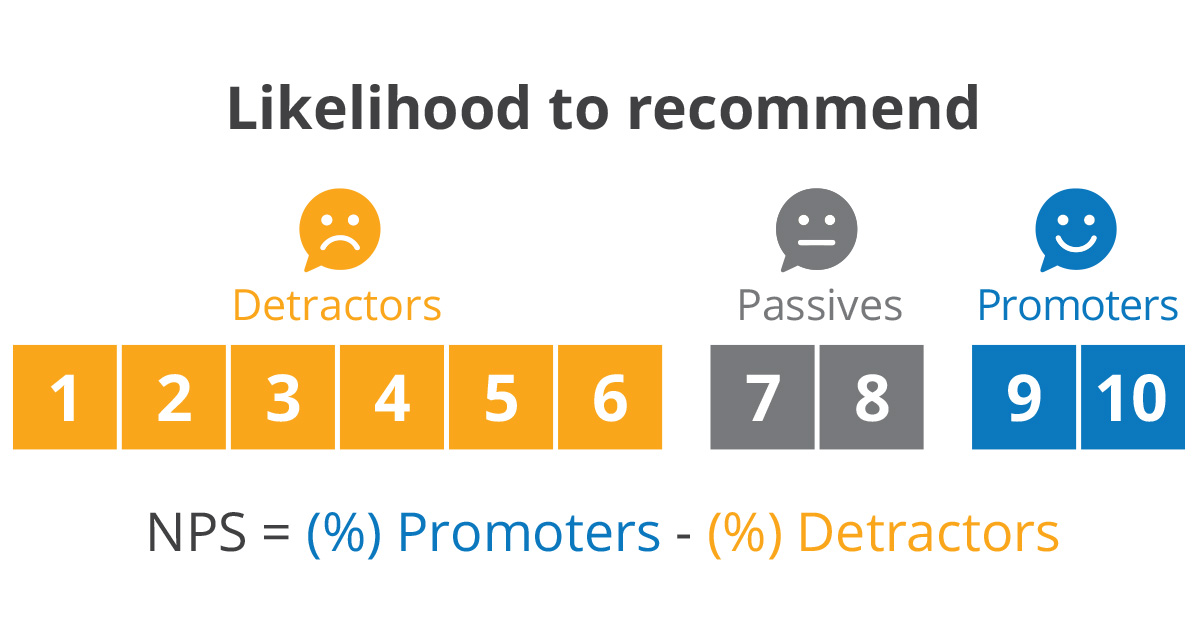
A higher NPS — meaning more “Promoters” — signals stronger loyalty and greater growth potential. It also means a lower churn rate. But here’s the catch: it turns out when you ask this question is just as important as asking it at all.
Many businesses believe that collecting NPS at every step is the best way to measure customer satisfaction. It seems thorough, right? But our data shows something different. We've found that the most meaningful and predictive NPS — the kind that helps you build an effective customer retention strategy — comes at the very end of the customer's journey, where lasting impressions are formed and future behavior takes shape.
The key to accurate customer insights
At Assurant, while we collect and measure customer feedback through the customer's journey, we measure NPS after a service or claim is fully completed. This is when customers have experienced the full value of what we deliver. We do this for a simple reason: it's the most reliable signal of true loyalty and customer retention.
Think about it from your customer's point of view. Their final impression is what sticks. It’s the feeling they're left with after their problem is solved and their needs are, or are not, met. Our data backs this up. Customers who rate us highly at the end of a claim are far more likely to remain customers. Those who give low scores are at a higher risk of leaving. Perfecting the timing of your NPS measurement is a cornerstone of a smart customer retention strategy.
The pitfalls of measuring NPS too often
So, why not measure NPS at multiple points along the way? While it might seem like you're gathering more data, this approach can actually point you in the wrong direction and make it harder to truly improve customer experience.
- Mid-journey feedback doesn't predict the final outcome. A customer who feels frustrated early on might end up delighted by the final resolution.
- On the other hand, a smooth start can be ruined by a poor finish. Measuring NPS too early can create a false sense of satisfaction or dissatisfaction.
- These early-in-the-process scores often look better than the final reality, which runs counter to our commitment to transparency and meaningful impact.
The bottom line? Measuring NPS at the wrong time can mislead you. It distracts from the high-impact fixes that can truly improve the customer experience and deliver better results for your business.
A real-life example: The customer journey shift
Let's look at what this means in practice. We analyzed the journey for one of our mobile clients and found some fascinating results.
- We saw that 88% of customers who were happy ("Promoters") when they first filed a claim online were still happy at the end of the process.
- But what about the unhappy customers ("Detractors")? Only 50% of them stayed unhappy.
- A remarkable 30% of initially frustrated customers turned into loyal Promoters by claim resolution.
This shows that early impressions aren't the full story. The final experience is what truly shapes a customer's loyalty.
The proof is in the numbers: How to predict customer churn
The most telling data point is how this final score connects to customer retention. Following NPS best practices gives you a clear window into future behavior.
- Customers who ended their claim as Promoters had the same 90-day post-claim attrition rate as those who began as Detractors – showing that initial sentiment didn’t predict post-claim behavior.
- Customers ending the claim journey as Detractors had up to 5 percentage points higher 90-day post-claim attrition than Promoters – even if they started as Promoters.
What does this tell us? The Net Promoter Score calculated at the end of the customer’s journey is the most accurate predictor of their future behavior. It’s the metric that matters most for your bottom line.
Our focus is on what lasts
This doesn't mean we ignore the rest of the journey. We have many listening posts to gather customer journey feedback, including after-support interactions, digital self-service experiences, and more. These insights help us train our team and improve our tools.
But when it comes to predicting loyalty and driving business growth, we focus on the moment that leaves the most lasting impression. It’s where your customers decide if they’ll stick with you for the long haul. By placing particular emphasis on the end result and outcome of a customer's journey, we ensure we’re meeting — and exceeding — their expectations.
This approach creates lasting value that helps improve customer experience for our clients' customers and businesses, as well as our own.

Assurant Editorial Team
The Assurant Editorial Team shares stories that inspire and empower, helping you unlock opportunities and stay ahead with the latest research and insights. Assurant is a premier global protection company that partners with the world's leading brands. As a Fortune 500 company operating in 21 countries, we leverage data-driven technology solutions to provide exceptional customer experiences.